Shopping transparency: links in this guide currently lead directly to retailers, without affiliate tracking. If we add commission-earning links, we will identify them. Read our affiliate disclosure.
A useful edit for the desk drawer, the commuter tote and mornings when five minutes is enough.
Start with the morning you have
Picture where you get ready, how much light reaches the mirror and whether you finish before leaving home. Someone applying everything at a dressing table needs a different kit from someone adding lip colour between the station and the office. Begin with that setting rather than a list of products everyone supposedly needs. Your favourite step deserves room, even when the rest of the routine is short.
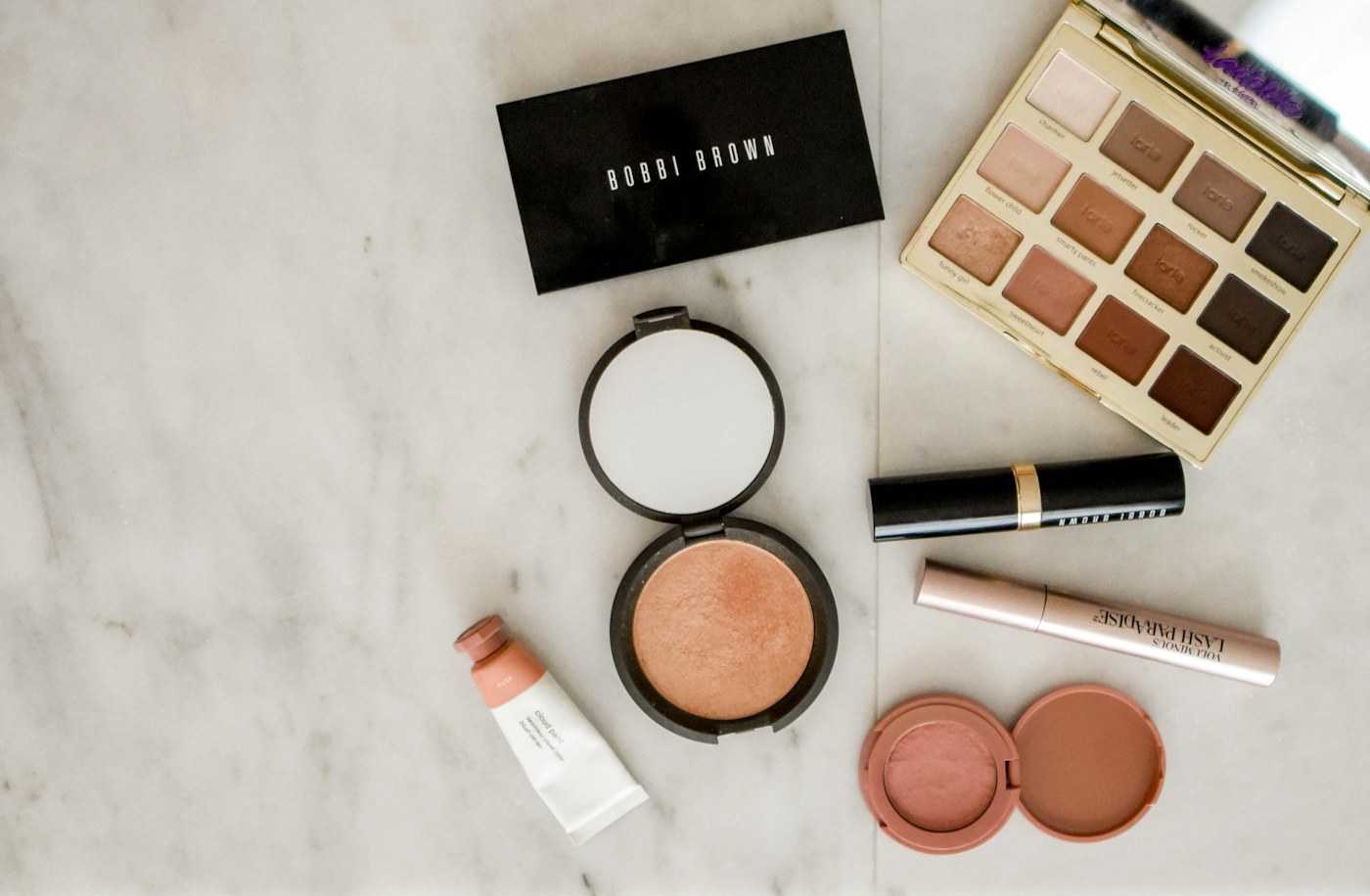
Empty your current bag onto a clean surface. Separate the things you reach for most mornings from the things you carry because you might use them. Keep occasional evening products in another pouch. This is an organizational edit: a compact collection can still include a bold lipstick if that is the part you enjoy. Notice duplicate shades before making a shopping list.
Give every product a clear job
Choose a base only if you like wearing one. Concealer, foundation and tinted products serve different preferences; carrying all three makes sense when you actually use all three. Think about finish, shade and application method before packaging. A beautiful bottle is less useful if it requires a brush you never pack or a long application you regularly skip.
For colour, identify the effect you want: definition around the eyes, warmth across the cheeks or a brighter lip. A multipurpose product can save space, but check its intended application areas before using it across eyes, lips and cheeks. Separate products can be the better purchase when you prefer different textures in each place. Convenience should suit your preferences rather than dictate them.
Match the bag to the location
For home, a shallow pouch or tray makes items visible. For a commute, choose a secure zip and a lining you can clean according to its care instructions. A structured case offers separation but occupies more room in a tote. Measure the space beside your water bottle before buying a case that looks conveniently small online.
Build a desk kit around touch-ups you make. A lip product, mirror and blotting papers may be sufficient; an entire duplicate collection can sit unused. Avoid leaving cosmetics in a hot parked car or sunny window. Follow storage guidance and inspect packaging before relying on something that has travelled in a handbag for months. Keep any necessary label information accessible.
Shop with your existing colours nearby
Photograph the shade names of products you like and note why they work. That record is more useful than a vague wish list. View shades in person when possible and use testers only as permitted by the retailer. Online swatches can narrow options, but screen settings and lighting change their appearance. Check the returns policy before opening a purchase.
Compare practical details: whether caps close securely, pencils need a sharpener and compacts include a mirror. Add the space and cost of accessories to your decision. A product requiring a separate tool is not automatically a poor choice, but compare it honestly with something you can apply directly. Buying a set saves money only if its contents will earn a place in your routine.
Keep the edit useful
Read opening symbols and any expiry or disposal instructions on the actual packaging. Mark an opening date when helpful. Do not judge suitability only by whether product remains, and stop using an item if it appears altered or causes discomfort. Clean the bag according to its instructions and separate it from loose pencil shavings or spilled powder.
After a week, notice what you carried without touching. Move those products back to storage and try the lighter bag. Give each purchase one specific role before adding it. The goal is a collection that supports your preferences, with enough room to find what you want without tipping everything onto a café table. Review that collection when your schedule changes.
A thoughtful shopping shortlist
These are shopping directions, not hands-on product reviews. Use the criteria above to compare current items at the retailer. Browse links open a retailer catalogue; check the exact product, materials, dimensions, price and return terms before ordering.
| Option | Best fit | Tradeoff to check |
|---|---|---|
| Small wipe-clean zip pouch | A commuter kit with a few everyday products | Less separation than a structured case; check lining care instructions |
| Compact mirror with a secure cover | Touch-ups away from home | Redundant if your existing compact already has a useful mirror |
Small wipe-clean zip pouch
Consider it for: A commuter kit with a few everyday products
The tradeoff: Less separation than a structured case; check lining care instructions
Browse John Lewis ↗Compact mirror with a secure cover
Consider it for: Touch-ups away from home
The tradeoff: Redundant if your existing compact already has a useful mirror
Browse Boots ↗Your questions, considered
How many products belong in a daily bag?
There is no universal number. Start with what you use during a normal week and the tools required to apply it.
Should I buy miniature versions of everything?
Only when the format suits your usage. Compare quantity, packaging practicality and whether you will finish each item before buying a set.
This article belongs to our 15 December 2025 editorial issue. Brondema’s online launch was 11 October 2026. Issue dates label the editorial collection and are not publication or revision dates. How we publish.